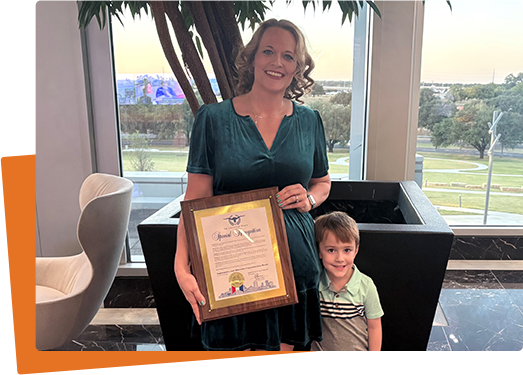
Elliott’s Voice was created by a mother who believed her son deserved to be heard.
Elliott was diagnosed with Autism and Childhood Apraxia of Speech (CAS) which is a motor speech disorder that makes it difficult to coordinate the muscle movements needed to speak. Like many families navigating communication challenges, we quickly realized that communication is about more than speech
Elliott’s Voice was created by a mother who believed her son deserved to be heard.
Elliott was diagnosed with Autism and Childhood Apraxia of Speech (CAS) which is a motor speech disorder that makes it difficult to coordinate the muscle movements needed to speak. Like many families navigating communication challenges, we quickly realized that communication is about more than speech
AAC stands for Augmentative and Alternative Communication. It includes tools and strategies—like communication boards, speech-generating devices, or ASL-help people express themselves when speaking is difficult.
Childhood apraxia of speech (CAS) is a motor speech disorder where a child’s brain struggles to plan and coordinate the movements needed for speech. Children with CAS may know what they want to say but have difficulty saying it clearly.
Anyone with difficulty speaking or expressing themselves can benefit from AAC. This includes adults and children with apraxia, autism, cerebral palsy, Down syndrome, or other communication challenges.
Start simple! Choose a board that matches your child’s age, abilities, and daily activities. Use boards with familiar words, pictures, or symbols, and expand as your child’s skills grow.
Yes! AAC works best when it’s used everywhere—at home, in school, and in the community. Consistent use helps children communicate more naturally and confidently.
Model it yourself! Speak and point to the words or symbols on the board while interacting. Encourage your child to use the board to make choices, answer questions, or tell you what they want. Celebrate every attempt—they’re learning each time!